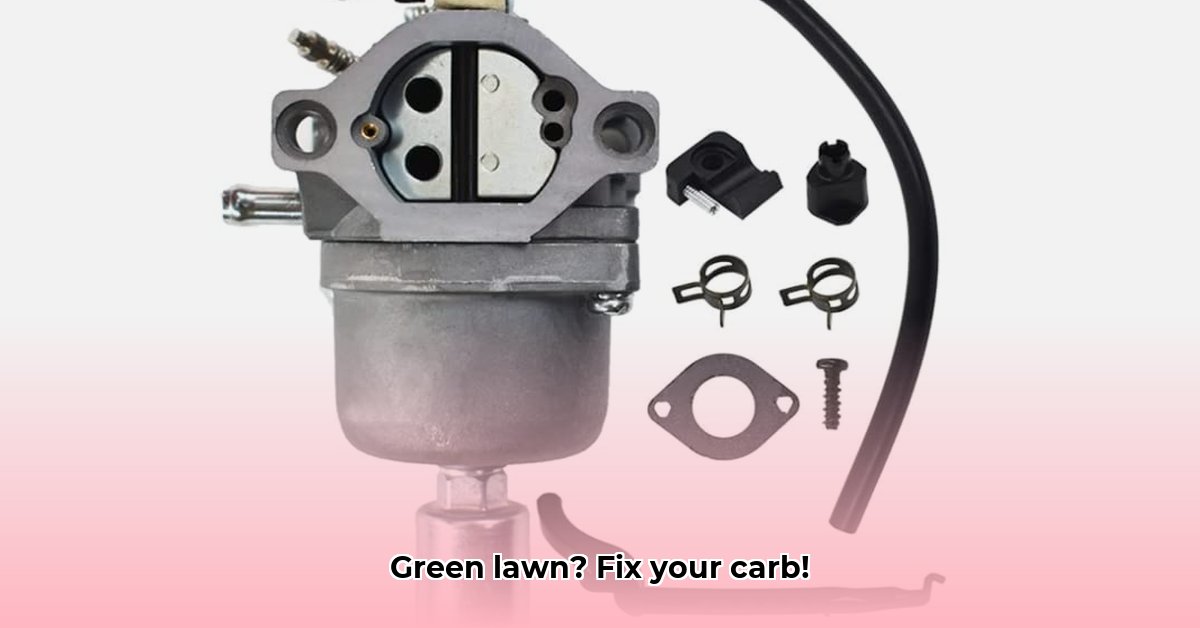
Gas-guzzling lawn tractors aren't just expensive; they're environmentally unfriendly. But you can make a difference! This guide provides step-by-step instructions on maintaining your lawn tractor's carburetor for optimal efficiency, saving you money and reducing your environmental impact. For troubleshooting stubborn issues, check out this helpful guide on lawn tractor smoke.
Understanding Your Lawn Tractor Carburetor
Your lawn tractor's carburetor (carb) is the heart of its fuel system. It precisely mixes air and fuel, creating the combustion necessary for a powerful, efficient cut. A poorly performing carb wastes fuel, reduces power, and increases emissions. Think of it as the engine's carefully calibrated fuel injector. A well-maintained carb means a healthier engine and a smaller carbon footprint.
Maintaining Your Lawn Tractor Carburetor: A Step-by-Step Guide
Regular maintenance is key to a long-lasting, efficient carb. Follow these simple steps:
1. Visual Inspection (Before Each Use):
Before every mowing session, give your carb a quick once-over. Look for cracks, leaks, loose connections, or any signs of damage. Addressing minor issues early prevents major problems. This quick check can save you significant time and money down the line.
2. Cleaning (Every 25 Hours of Use, or as Needed):
Dust, dirt, and debris clog the carb's jets, reducing performance. Use compressed air to gently blow away any buildup. For stubborn clogs, use a carburetor cleaner (following instructions carefully). Remember, patience and a gentle touch are crucial here to prevent accidental damage. A clean carb ensures optimal fuel efficiency.
3. Troubleshooting (If Performance Issues Arise):
Does your tractor struggle to start? Does it sputter or stall? These are common signs of carb problems. Start with cleaning. If problems persist, a clogged jet might be the culprit. A simple cleaning often fixes the issue. Persistent problems? It's time to consult a professional. Don't risk causing further damage by attempting complex repairs yourself.
4. Adjustments (Leave This to the Pros):
Unless you're experienced with carburetor mechanics, avoid making adjustments. Improper adjustments can cause further damage and cost more in the long run. Professional help ensures the job is done correctly, saving you time and money.
5. Repair or Replace (Weighing Your Options):
Is your carb beyond repair? Replacing a worn-out part is often more cost-effective than endless repairs. Consider the total cost of repair versus replacement before deciding. A new, high-quality carb will likely result in long-term fuel savings, and environmental benefit.
Choosing Eco-Friendly Options: Investing in Sustainability
Choosing a durable, long-lasting carb is an investment in sustainability. A high-quality carb reduces the need for frequent replacements, minimizing waste and environmental impact. Research models known for durability and efficiency. Even small improvements add up, making a significant difference in fuel efficiency and emissions over the life of your equipment.
Responsible Disposal and Recycling: Minimizing Your Environmental Impact
When replacing your carb, proper disposal is crucial. Many components can be recycled. Check with your local waste management authority for recycling guidelines. Responsible disposal shows care for the environment and minimizes waste ending up in landfills.
Eco-Friendly Fuel Choices: Fueling Your Sustainable Efforts
Using ethanol-free gasoline is significantly beneficial. Ethanol can damage certain carburetor components over time. Ethanol-free gasoline extends your carb's lifespan, reduces fuel consumption due to better combustion, and is a more sustainable fuel source.
Sustainability Checklist: Lawn Tractor Carb Maintenance
| Task | Frequency | Environmental Benefit | Cost Savings |
|---|---|---|---|
| Visual Inspection | Before each use | Prevents major problems, extending carburetor lifespan | Prevents costly repairs |
| Cleaning | Every 25 hours, or as needed | Prevents clogging, improves fuel efficiency | Reduces fuel consumption |
| Troubleshooting and Repair/Replacement | As needed | Prevents further damage, minimizes fuel consumption | Avoids costly repairs |
| Responsible Disposal | When necessary | Reduces landfill waste, conserves resources | Potential recycling credits |
By prioritizing regular maintenance, you'll enjoy a more efficient engine, lower fuel bills, and contribute to a greener environment. A well-maintained carburetor is a small step that yields significant long-term benefits.